|
Invest In This Book, Invest In Yourself(Rating: 5) With more than one million copies sold and an endorsement on the cover by Warren Buffet, you know there has to be something to this book- and I think I know why. Simply because it is the first book ever to describe the emotional framework and analytical tools necessary for financial success for individual investors.
Probably the single best book on investing written for the lay-public and the stock market bible since its first appearance in 1949, it's a great resource, although it's quite a thick book and filled with detail- and probably not for anybody but the serious stock market investor. And if getting motivated to start investing is your problem, suggest The Sixty-Second Motivator. Good luck!
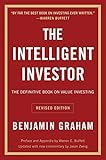
A Fresh Look at an Investment Classic(Rating: 5) When it comes to the subject of investment, one cannot speak about it without mentioning the household name, Warren Buffett. After all, this is a man who had made himself the second richest man in the world solely by investing money in companies. It is through learning more about Buffett that lead me to Benjamin Graham and his investment classic, The Intelligent Investor. In this 2003 updated edition, supplementary commentaries and footnotes were added throughout the book by Jason Zweig, a senior writer at Money magazine. This updated edition offers a fresh look at an investment classic, and convinces the reader that the book is still relevant 33 years after Graham’s last revision.
Let me begin then with an observation. Nowadays, just about everybody who has worked a day job knows about putting their money in the stock market. There are some who does it out of greed, some out of fear, but the vast majority does it just because everybody else is doing the same thing! It appears to me that only a tiny group of minorities are really making intelligent investment decision. What about the rest? They buy/sell when they feel like it. Emotion is their chief investment advisor, and they listen to it religiously. Is it any wonder that the financial market behaves the way it does? Good news, because one will learn from Graham that the sillier the market’s behavior, the greater the opportunity for the business-life investor.
Graham begins by laying out the foundational definition of investment versus speculation. “An investment operation is one which, upon thorough analysis, promises safety of principal and an adequate return. Operations not meeting these requirements are speculative." In the following chapters, Graham gives his reader unprecedented access to the stock market history and grants readers the wisdom that are used in developing portfolio policies in the body of the book. This book attempts to inject some transparency into the secret world of finance and he has succeeded abundantly.
The final and most important chapter of this book sums up the secret of sound investment into three words, MARGIN OF SAFETY. To quote, “The margin of safety is always dependent on the price paid. It will be large at one price, small at some higher price, nonexistent at some still higher price.”
The Intelligent Investor isn’t a book about analyzing companies, but one which really nails into the readers’ heads the proper investment principles and attitudes. Professor Graham’s academic writing style delivers his powerful idea in a simple and gentle way.
To summarize, in the added appendix of the book is an article called Superinvestors of Graham of Doddsville written by Buffett, “There seems to be some perverse human characteristic that likes to make easy things difficult… Ships will sail around the world but the Flat Earth Society will flourish. There will continue to be wide discrepancies between price and value in the marketplace, and those who read their Graham & Dodd will continue to prosper.”
Note to "A customer from New York, NY:(Rating: 5) Newsflash: The guy's dead - and has been for years. Not getting that "big advance" you would begrudge him (unless there is a market in Heaven?)
one of, if not the best, equity investment book(Rating: 5) this is buffets' bible for good reason. the book's central concept, the margin of safety, is reinforced time and again w/ supporting ratios and working examples, both from the 60-70s and from zweig's excellent supplements (an extremely valuable supplement to the original text, if for no other reason than to show that graham's teachings are timeless). while occasionally ratios will appear dated and no longer relevant (i.e. book value's importance has declined w/ the transition of the US eq mkt to increasing intellectual capital in a company's mkt cap), its discipline, focus and litmus tests (i.e. bond yields vs E/P ratios) still remain valid. for the individual investor, there simply is no better book.
Classic book, but annoying commentaries(Rating: 2) I was deciding between getting this edition or the more expensive hardbound edition (which does not contain the Jason Zweig commentaries). I naturally thought, why not go for the cheaper one and get the commentary for free? After all, I could just ignore the commentary if it doesn't help. Bad bad choice. It was like choosing between a Beethoven CD and the same CD but with free shrieking commentary by a Damon Wayans movie character during and in between each symphony. Zweig's writing when inserted between Graham's is like the annoying paperclip in MS Office, except there is no way to turn it off. He's in the footnotes (virtually every page!), he's in between every chapter. Open the book at a random page, and most likely you'll open it to a Zweig page. The content and style of his writing feels condescending and contrasts so much with Graham's. When reading Graham you have elegant timeless prose by a humble, wise man who makes you feel he is sincerely interested in your well-being. By contrast, Zweig feels like someone who wants to impress you with his word plays, and puns. He really should have attempted to recede into the background and limited his voice. I would recommend everyone to just buy the hardcover edition. Buy Graham only. If you cannot read Graham, Zweig will only help marginally, and you still need to verify his comments against other contemporary Graham commentators. Get another book. If you *can* read Graham, then you do not need the commentaries in this book. Any questions you may have can be answered in thousands of sites on the net.
|